
Advertisement

Editor, October 23, 2026
12
3 min(s) read
Advertisement
Precious Nwonu, Enugu
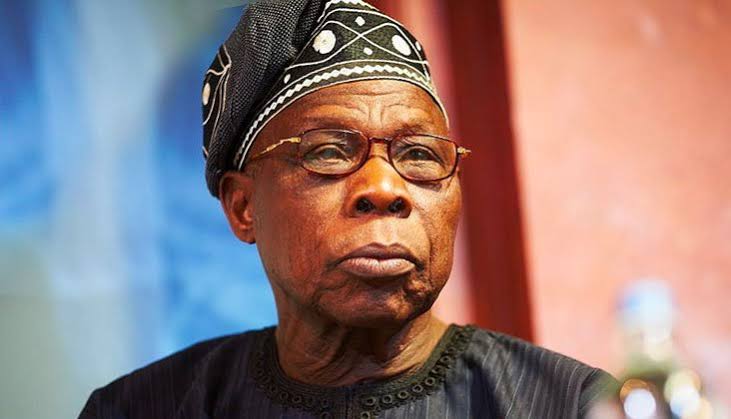
Former President Olusegun Obasanjo has criticised the economic policies of President Bola Tinubu, arguing that the sharp depreciation of the naira has worsened poverty and hardship across Nigeria.
Obasanjo made the remarks on Wednesday at the Financial Times Africa Summit 2026 in London, United Kingdom, where he questioned the impact of the reforms introduced by the Tinubu administration in 2023.
He argued that the naira’s depreciation had significantly reduced Nigerians’ purchasing power, noting that the exchange rate moved from about N500 to the dollar to approximately N1,500.
“We do not live in isolation as a country. We interact with the rest of the world. And overnight, you devalue the currency by 300 per cent. The naira went from N500 to a dollar to N1,500 to a dollar. What that meant was that every Nigerian is made poor by 300 per cent,” the former president said.
Obasanjo described Nigeria as the “poverty capital of the world”, arguing that the economic changes had increased the number of people struggling to meet their basic needs.
He rejected suggestions that the President should be given more time for his reforms to deliver results, saying he had yet to see sufficient improvement in the economy.
“For the economy, I don’t see anything getting better. What policies are you seeing through? You impoverish your people, and you want to see impoverishment through?” he asked.
The former president also maintained that the administration’s policies were not serving the interests of Nigerians.
On the removal of the petrol subsidy, Obasanjo acknowledged the importance of fuel to households and businesses but argued that corruption associated with the subsidy regime should have been addressed before the policy was scrapped.
He said a country facing severe economic difficulties should focus on eliminating corruption, reducing waste and unnecessary spending, and increasing domestic production.
The Central Bank of Nigeria unified its foreign exchange windows on June 14, 2023, when the official exchange rate stood at approximately N460.8 to the dollar. The naira subsequently weakened, reaching about N1,333.54 to the dollar on the official market on October 19, before falling to around N1,607.05 in early May 2025.
Despite the currency’s depreciation, official figures cited in the report showed that Nigeria’s headline inflation fell to 14.63 per cent in September from 20.98 per cent a year earlier. Food inflation, however, remained higher at 19.59 per cent, while the economy recorded real gross domestic product growth of 4.43 per cent in the second quarter.
Meanwhile, the Minister of Finance and Coordinating Minister of the Economy, Taiwo Oyedele, said on August 19 that the removal of the petrol subsidy had saved the government N15.8tn between June 2023 and December 2025.
Efforts to obtain the Presidency’s reaction to Obasanjo’s comments were unsuccessful, as the President’s Special Adviser on Information and Strategy, Bayo Onanuga, could not be reached.
It takes a lot to get credible, true and reliable stories.
As a privately owned media outfit, we believe in setting the pace and leaving strides in time.
If you like what we do, you can donate a token to us here. Your support will ensure that the right news is put out there at all times, reaching an unlimited number of persons at no cost to them.
Comments expressed below by readers do not reflect the opinions of Pacesetter Frontier Magazine or any employee thereof.
Advertisement
Leave your reply!